Move-Out Cleaning Checklist for Virginia Renters: Getting Your Security Deposit Back
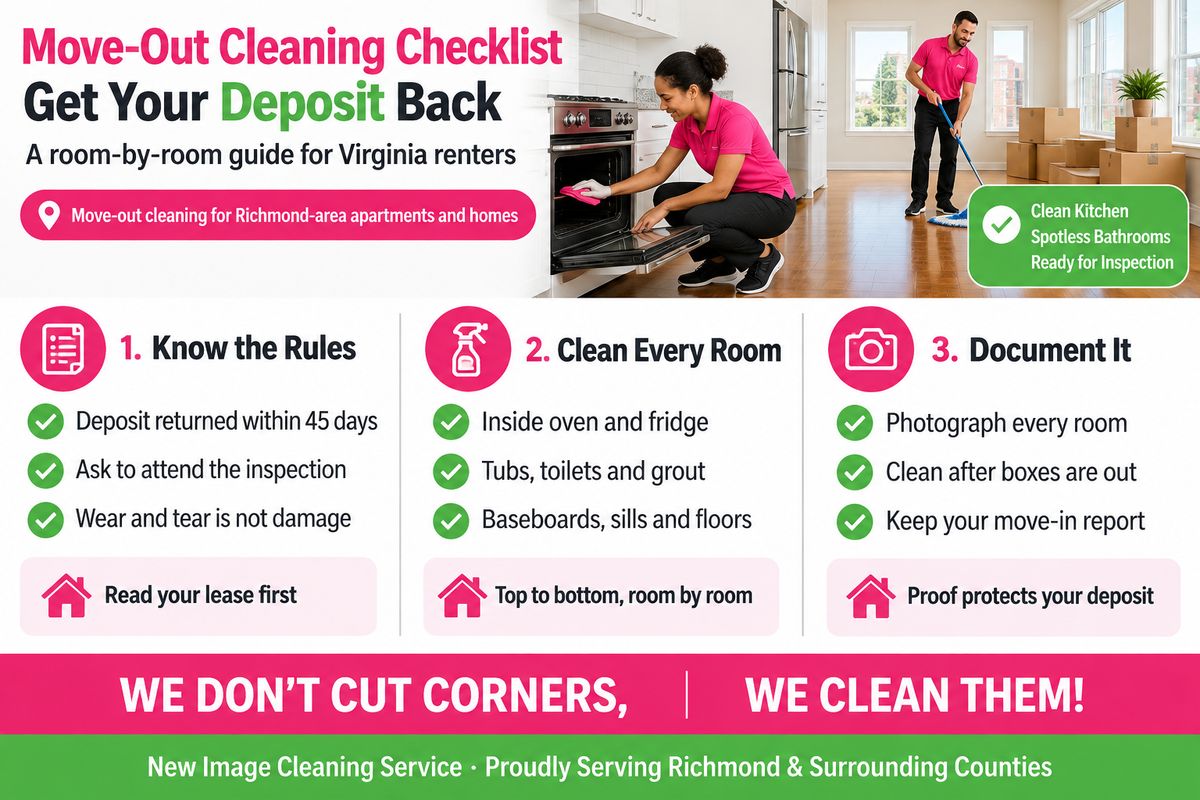
- Know Virginia law (Va. Code § 55.1-1226): security deposits capped, landlord must give itemized deductions within 45 days, you can attend the move-out inspection.
- Clean room-by-room: degrease the oven and stovetop, scrub bathrooms, vacuum and mop floors, wipe walls and baseboards, remove all trash and belongings.
- Document condition with dated photos and your move-in report; schedule final clean after unit is empty, book New Image Cleaning Service early in Richmond.
The last week of a lease is usually chaos: boxes, a truck reservation, utility transfers, and a new place waiting. Cleaning the unit you are leaving is easy to rush, but it is also one of the few parts of the move that directly affects money you get back. This move-out cleaning checklist walks through what Virginia renters should clean room by room, what landlords look for at inspection, how wear and tear differs from damage, and what Virginia law says about returning your security deposit.
What Virginia Law Says About Your Security Deposit
Most residential leases in Virginia fall under the Virginia Residential Landlord and Tenant Act. The security deposit rules are in Va. Code § 55.1-1226. A few points every renter should know:
- The deposit is capped. A landlord may not demand or receive a security deposit of more than two months’ rent.
- Deductions are limited. The landlord can apply the deposit to unpaid rent (including reasonable late charges in the lease), damages caused by the tenant failing to meet their maintenance duties less reasonable wear and tear, other damages or charges provided in the rental agreement, and actual damages for breaking the lease.
- There is a 45-day deadline. The landlord must give you a written, itemized notice of the deposit and any deductions, along with any amount owed to you, within 45 days after the tenancy ends or you vacate, whichever happens later.
- You can attend the move-out inspection. When the landlord asks you to vacate, or within five days after receiving your notice that you intend to vacate, the landlord must tell you in writing that you have the right to be present at the move-out inspection. If you want to attend, tell the landlord in writing. The inspection must take place within 72 hours of delivery of possession.
- The move-out report matters later. After the inspection, the landlord provides a written disposition statement with an itemized list of damages. If the landlord later claims additional damage, the law allows you to use a copy of the move-out report as evidence that the damage wasn’t there when you left.
The tenant duties referenced in that section include keeping the parts of the unit you use “as clean and safe as the condition of the premises permit” and keeping plumbing fixtures as clean as their condition permits. In other words, cleanliness is part of your legal obligations as a tenant, not just a courtesy. Also give your landlord a forwarding address in writing: the statute directs the deposit refund to a forwarding address provided by the tenant, and if none is provided, the landlord may continue holding the deposit.
This is a general overview, not legal advice. Your lease may add specific cleaning requirements, so read it before move-out week, and contact a Virginia attorney or legal aid office if you have a dispute.
What Landlords and Property Managers Inspect
Inspections tend to focus on the same places, because those are the places that cost money to fix before the next tenant moves in:
- Kitchen appliances: grease inside the oven, spills in the refrigerator, crumbs in the drawers, a grimy range hood
- Bathrooms: soap scum, hard-water spots, mildew in grout and caulk, toilet bases
- Floors: carpet stains, sticky spots, dirt along edges and baseboards
- Walls: scuffs, nail holes, marks around light switches and door frames
- Anything left behind: trash, furniture, items in closets, cabinets, or storage areas
Property managers with a lot of turnover often have a standard make-ready checklist. Asking for a copy before you move out is the easiest way to know exactly what will be checked.
Normal Wear and Tear vs. Damage
Because Virginia law deducts damages “less reasonable wear and tear,” it helps to know which side of the line common issues fall on. The statute doesn’t list examples, so think of it this way: wear and tear is the gradual decline that comes from ordinary living; damage is harm beyond ordinary use, from accidents, neglect, or misuse.
Issues commonly treated as normal wear and tear:
- Lightly worn carpet in walkways
- Minor scuffs and faded paint
- A few small nail holes from hanging pictures
- Loose door handles or worn finishes from everyday use
Issues commonly treated as damage or a cleaning deficiency:
- Large stains, burns, or pet damage in carpet
- Holes in walls, broken blinds, cracked tiles
- Baked-on grease in the oven, mold left to spread in the shower
- Trash or belongings left behind
Cleaning won’t fix true damage, but it removes a whole category of deductions. A dirty oven or a bathtub ring is not wear and tear. It is simply unfinished work your landlord may pay someone else to do.
Room-by-Room Move-Out Cleaning Checklist
Work top to bottom in each room so dust and debris land on surfaces you haven’t cleaned yet, and do floors last.
Every room
- Remove cobwebs from ceilings and corners
- Dust ceiling fans, light fixtures, and vents
- Wipe blinds and window sills
- Wipe doors, door frames, and light switches
- Spot-clean walls; check your lease before patching nail holes yourself
- Wipe baseboards
- Empty closets and wipe shelves
- Vacuum carpets and mop hard floors last
Kitchen
- Clean inside the oven, including racks
- Empty, clean, and dry the refrigerator and freezer
- Clean the microwave inside and out
- Degrease the stovetop, drip pans, grates, knobs, and range hood
- Wipe the inside and outside of cabinets and drawers
- Clean counters and backsplash
- Scrub the sink, drain, and faucet; run the dishwasher empty
- Wash the floor, including under the edges of appliances you can reach
Bathrooms
- Scrub tub, shower walls, and doors to remove soap scum and hard-water spots
- Treat mildew in grout and caulk lines
- Clean the toilet inside and out, including the base and hinges
- Clean mirrors, chrome, and the sink
- Empty and wipe the vanity and medicine cabinet
- Wash the floor and baseboards
Bedrooms and living areas
- Clean interior windows if your lease requires it
- Check behind and under where furniture stood for dust and lost items
- Clean closet floors and tracks of sliding doors
Don’t forget
- Washer and dryer, including the lint trap, if they convey with the unit
- Balconies, patios, and storage areas
- Returning all keys, fobs, and parking passes
Document Everything With Photos
Your best protection is a record of the unit’s condition at both ends of the lease. Under Va. Code § 55.1-1214, the landlord must give you a written report itemizing existing damage within five days after you move in, and that report is deemed correct unless you object in writing within five days of receiving it. Keep your copy; it is your baseline at move-out.
After the final clean, walk the unit with your phone:
- Take wide shots of every room, then close-ups of the oven interior, refrigerator, tub, toilet, and floors
- Photograph any existing damage alongside your move-in report
- Make sure photos are date-stamped, or email them to yourself the same day
- Keep copies of your move-out notice, forwarding address, and any written request to attend the inspection
When to Schedule Your Move-Out Clean
Timing is the step most renters get wrong. Cleaning around furniture and boxes means missing the spots inspectors check first, so plan the final clean for after everything is out and before you hand over the keys.
- Two to three weeks out: review your lease’s move-out terms and ask for the property’s checklist. Book professional cleaning now if you want it, since end-of-month dates fill up.
- Move day: get everything out, including trash and items in storage areas.
- After the unit is empty: do the final clean, take your photos, and attend the inspection if you requested to.
Richmond’s rental market has a lot of end-of-month and late-summer turnover, especially in apartment-heavy neighborhoods like Scott’s Addition and around VCU, so movers, elevators, and cleaners are all in demand on the same days. Leave a buffer if your lease allows it.
Get Your Richmond Move-Out Clean Handled
If you would rather spend move week on the move itself, New Image Cleaning Service handles move-in and move-out cleaning throughout the Richmond metro, along with apartment cleaning for renters and property managers. Tasks like the inside of the oven and refrigerator, interior windows, and washing walls are available on request, so tell us what your lease requires when you book. Our cleaners are bonded, insured, and background-checked employees, and if something isn’t right, call within 24 hours and we will return to make it right at no additional charge. Call 804-239-6790 or request a free quote.
Share this article
Related Posts





Follow us
A quick overview of the topics covered in this article.