Office Cleaning vs. Janitorial Service: What Richmond-Area Businesses Need
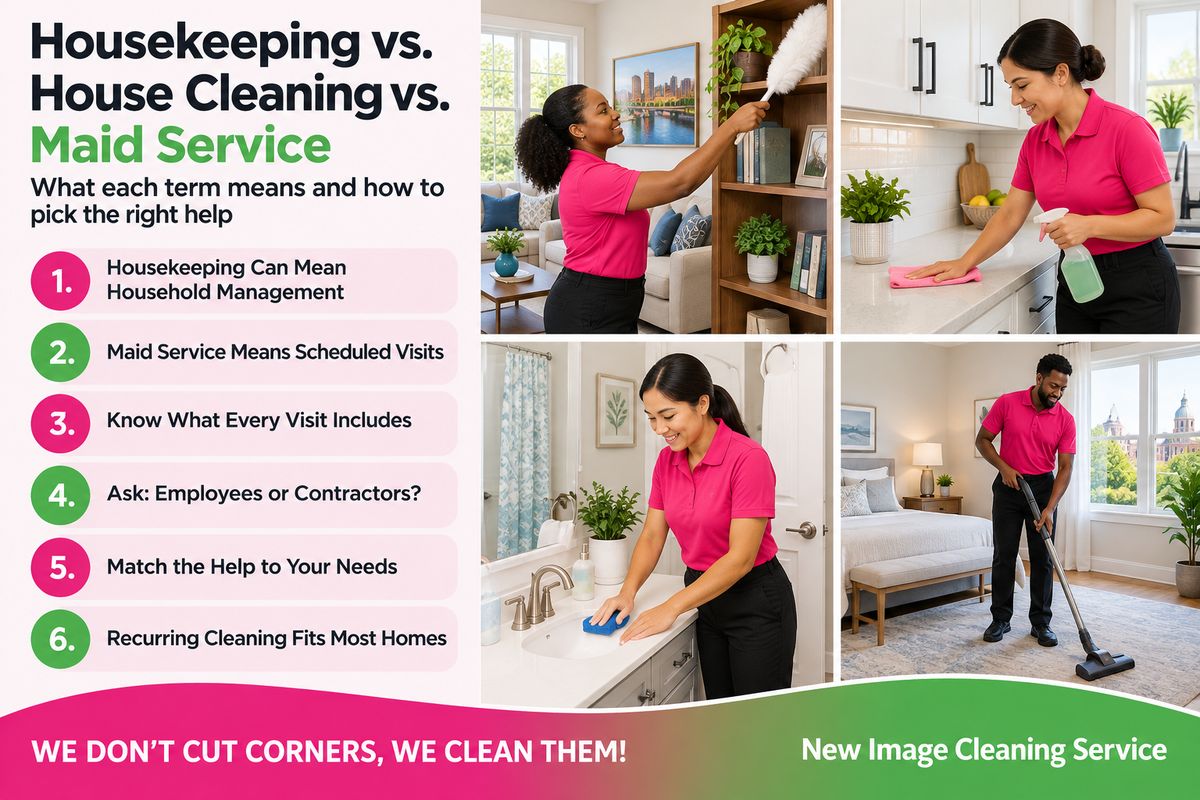
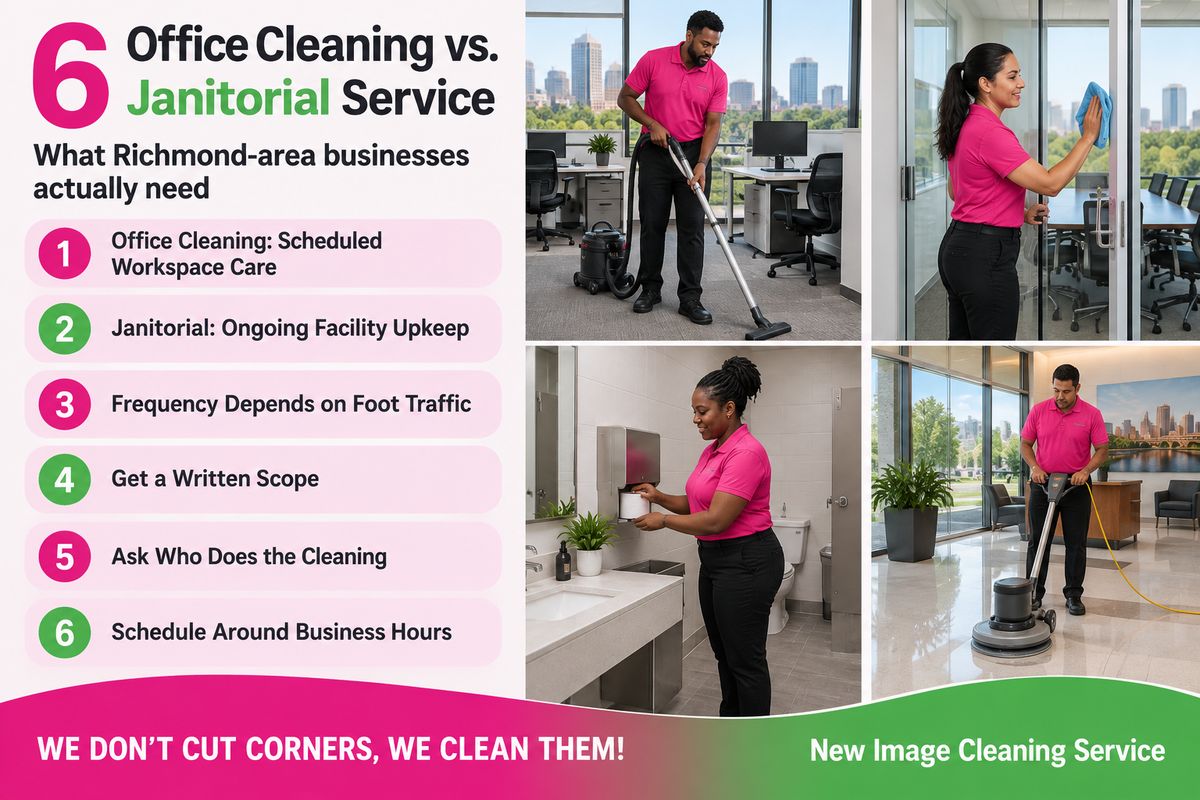
- Office cleaning is scheduled workspace cleaning; janitorial service includes ongoing facility upkeep like porter duties and supply restocking.
- Commercial cleaning is the umbrella term; prioritize a written, room-by-room scope since labels vary between providers.
- Service frequency varies: medical offices typically need daily, small offices weekly, and apartment complexes require porter service plus seasonal floor care.
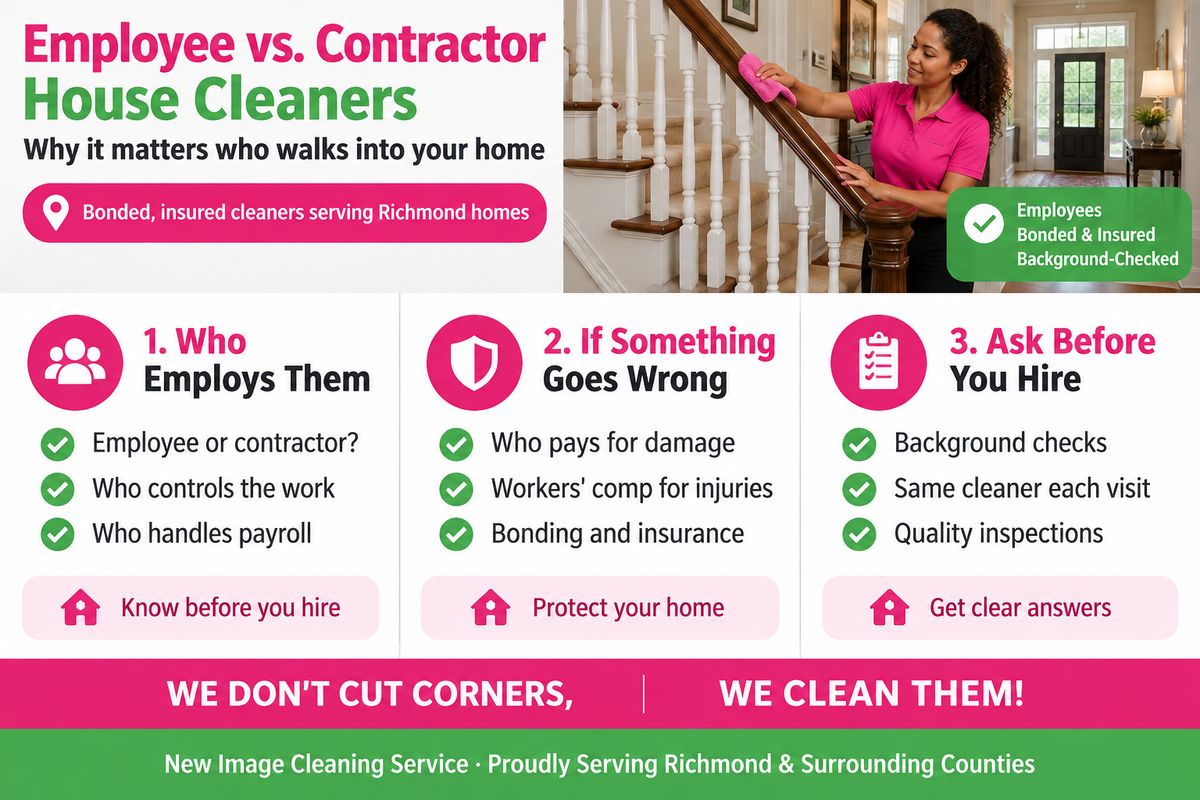
- Ask about who cleans (employees vs contractors), bonding/insurance/background checks, written scope, consumable responsibility, quality inspections and access procedures.
If you manage an office, a medical suite or an apartment community, you have probably seen “office cleaning,” “commercial cleaning” and “janitorial services” used as if they mean the same thing. They overlap, but they are not identical, and the difference affects what you are actually paying for. This guide breaks down what each term usually means, what a typical scope looks like, how often different types of businesses need service, and the questions to ask before you sign with a provider in Richmond, Chester or anywhere in the metro.
Office Cleaning vs. Janitorial Service: The Basic Difference
There is no legal definition for either term, and providers use them loosely. In general, though, the industry draws the line like this.
Office cleaning
Office cleaning usually refers to scheduled cleaning of the workspace itself: desks and common surfaces, restrooms, break rooms, floors and trash. It is typically done on a set schedule, such as nightly, a few times a week or weekly, and it focuses on keeping the space presentable and sanitary for employees and visitors. Think of it as the commercial version of a recurring house cleaning visit.
Janitorial service
Janitorial service tends to be broader and more ongoing. On top of routine cleaning, it often includes facility upkeep tasks such as restocking restroom supplies, hard floor care, managing trash and recycling across a property, and general day-porter work like walking common areas throughout the day to pick up litter and handle small messes. Janitorial contracts are common for larger buildings, multi-tenant properties and sites where cleaning needs to happen continuously rather than once a night.
Where commercial cleaning fits
“Commercial cleaning” is the umbrella term. It covers office cleaning, janitorial work and specialized services like floor stripping and waxing, all for non-residential properties. When you are comparing providers, the label matters less than the written scope. Two companies can both say “janitorial” and mean very different things.
What a Typical Scope Includes
Every property is different, but most commercial cleaning scopes are built from the same building blocks. Use this list to check that a proposal covers what you actually need.
Routine office cleaning tasks
- Emptying trash and recycling bins and replacing liners
- Dusting desks, shelves, window sills, blinds and other horizontal surfaces
- Wiping high-touch surfaces like door handles, light switches and shared equipment
- Cleaning and sanitizing restrooms, including toilets, sinks, mirrors and floors
- Cleaning break rooms and kitchenettes: counters, sinks, microwave and appliance exteriors
- Vacuuming carpets and mopping hard floors
Janitorial and facility tasks
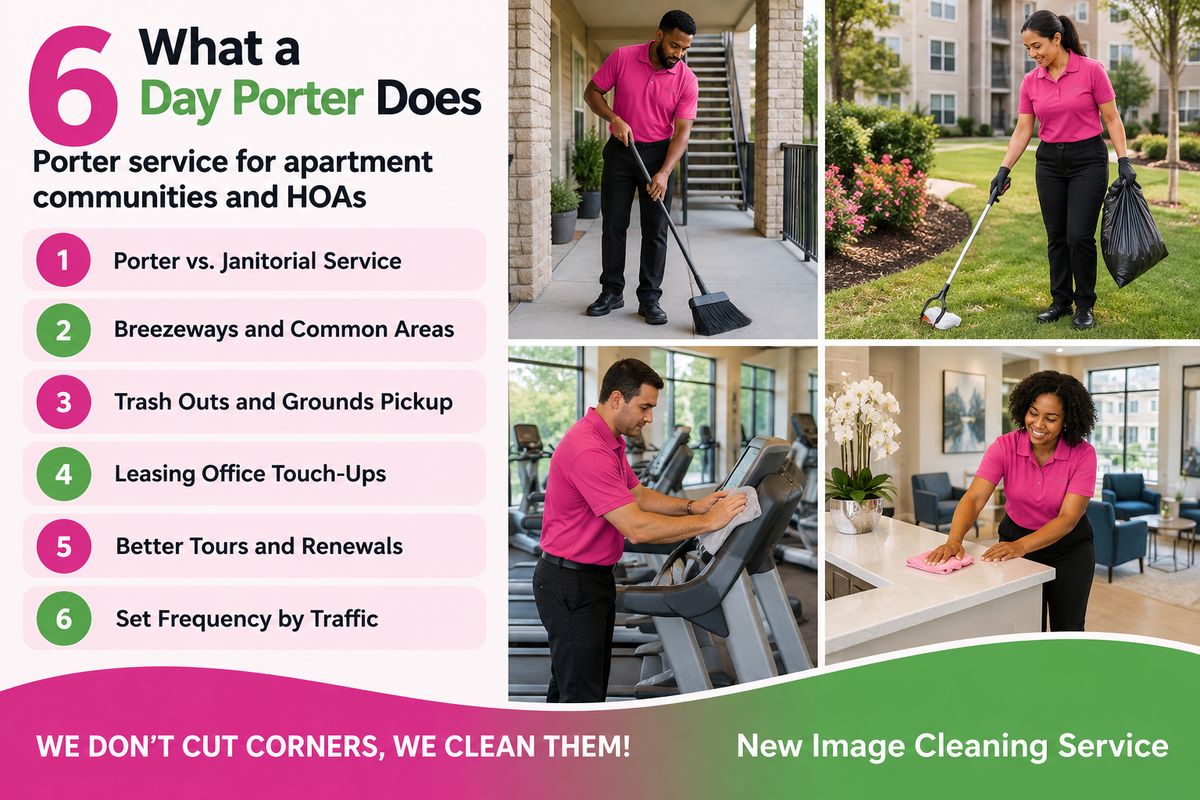
- Porter service for common areas, hallways, breezeways and grounds
- Trash outs and managing dumpster or compactor areas
- Restocking paper products and soap (confirm who supplies them)
- Floor buffing, stripping and waxing on a periodic schedule
- Grout cleaning in restrooms, lobbies and tiled areas
- Cleaning shared amenities such as fitness centers, laundry facilities and clubhouses
Floor care deserves special attention. Wet or poorly maintained floors are a slip hazard, and OSHA’s walking-working surfaces guidance requires employers to keep floors clean and, as far as possible, dry. A provider who handles floors should be able to explain how they manage wet floors during and after cleaning.
How Often Different Businesses Need Service
Frequency depends on foot traffic, the number of people using the space and how visible it is to customers. These are general starting points, not rules. Your provider should help you adjust based on what they see once they start.
- Small professional offices (accounting, law, insurance, real estate) with a handful of staff and few visitors often do well with service once to three times a week, with restrooms and trash as the priority.
- Larger or busier offices with many employees, shared kitchens and frequent client visits usually need nightly cleaning on business days.
- Medical and dental offices generally need daily cleaning and careful attention to waiting rooms, restrooms and high-touch surfaces. Clinical areas may have specific requirements, so spell those out in the scope.
- Retail and showrooms need floors, entryways and glass kept up frequently because customers notice them immediately.
- Apartment complexes and HOAs typically need a mix: regular porter service for grounds and breezeways, scheduled cleaning of leasing offices, clubhouses and fitness centers, and on-demand work like trash outs and vacant unit turnovers.
Seasons matter too. Central Virginia’s spring pollen coats entryways and window sills, and wet winter weather tracks salt and mud across lobby floors. Many businesses add extra floor care or entryway attention during those stretches.
What Richmond-Area Properties Often Need
The Richmond metro has a wide mix of commercial properties, from downtown offices to suburban office parks along the I-95 and Route 288 corridors in Chesterfield, to large apartment communities throughout Henrico and Chester. Many property managers and HOA boards are not just looking for office cleaning. They need a partner who can handle the whole property.
At New Image Cleaning Service, our commercial cleaning work covers offices, apartment complexes, HOAs and property managers. For residential communities, that includes leasing offices, model apartments, clubhouses, fitness centers, guest suites, laundry facilities and breezeways, along with grounds and porter services, trash outs, floor buffing, stripping and waxing, and grout cleaning. For property managers who also need units turned between residents, we handle vacant unit turnover and make-ready cleaning through our apartment cleaning service.
If your business or community is south of the river, our Chester cleaning services page covers how we serve that area.
Questions to Ask Before Hiring a Provider
Whether you call it office cleaning or janitorial service, the right questions protect you from surprises later. Ask every provider you are considering:
- Who will actually be cleaning? Are the cleaners employees or independent contractors? Are they bonded, insured and background-checked? This matters when people have after-hours access to your building.
- What exactly is in the scope? Get a written, room-by-room or area-by-area list, including how often each task is done. Vague proposals lead to disputes.
- Who supplies consumables and products? Clarify who provides paper towels, toilet paper, soap and trash liners, and who pays for them.
- How is quality checked? Ask whether supervisors or managers inspect the work and how often.
- What happens if something is missed? Find out how to report a problem and how quickly it will be addressed.
- How is building access and security handled? Discuss keys, key cards, alarm codes and who is responsible for locking up.
- Can the schedule flex? Ask how the provider handles holidays, special events, extra cleanings and seasonal floor work.
- How are cleaning chemicals handled? Workplace chemicals fall under OSHA’s Hazard Communication standard, so ask how products are labeled and stored on your site.
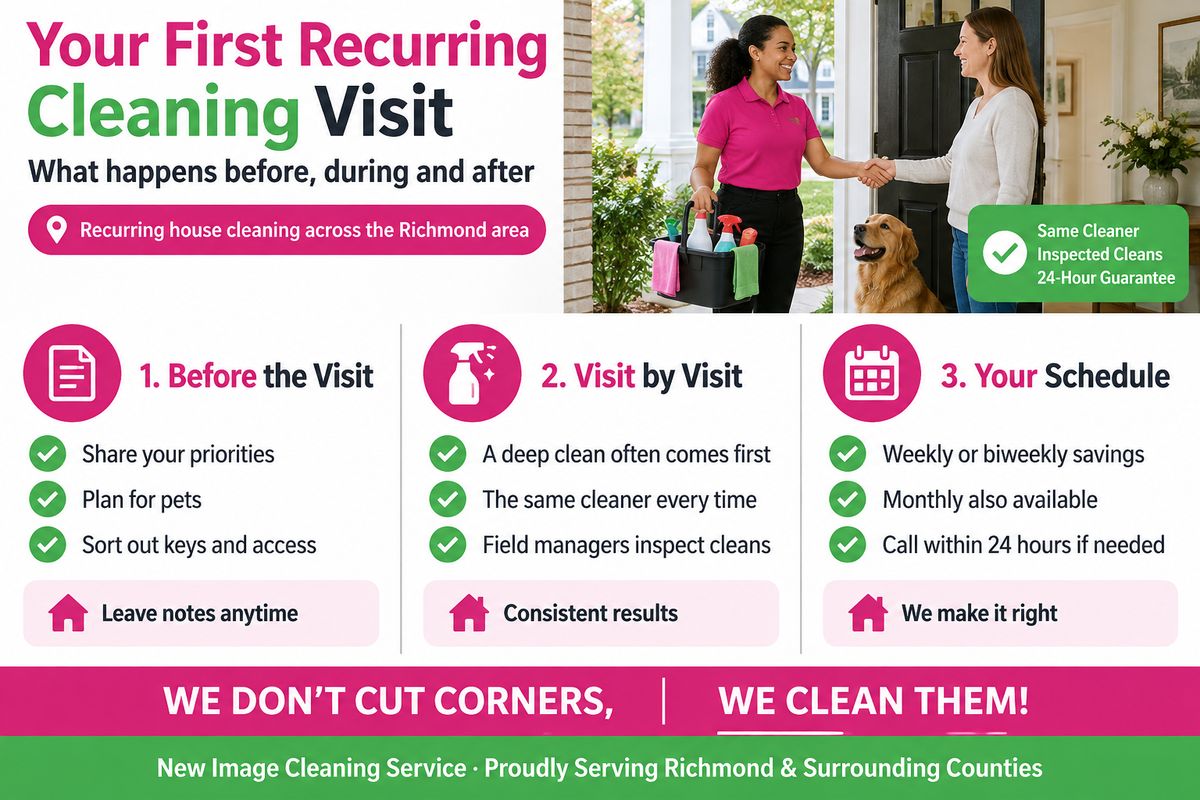
For reference, New Image Cleaning Service cleaners are employees, not independent contractors, and they are bonded, insured and background-checked. Field managers inspect our cleans, and if something is missed, call within 24 hours and we will return to make it right at no additional charge.
Scheduling Cleaning Around Business Hours
Most offices prefer cleaning when employees and customers are not there, so the work does not interrupt meetings, phone calls or client visits. A few things to think through when setting a schedule:
- After-hours or early-morning service keeps the space ready for the next business day without disruption. Discuss which works better for your building’s access and security setup.
- Daytime porter service makes sense for properties with constant traffic, such as apartment communities and multi-tenant buildings, where common areas need attention throughout the day.
- Periodic projects like floor stripping and waxing are usually scheduled for evenings or weekends so floors have time to dry before foot traffic returns.
- Clear communication matters most. Agree on a point of contact, how to request changes and how the cleaning team will let you know about issues like a leaking faucet or a broken fixture they notice.
Ask any provider what scheduling options they offer for your property, and make sure the agreed schedule is written into the scope.
Get a Cleaning Plan That Fits Your Property
New Image Cleaning Service is locally owned and has served the Richmond metro for 20 years, working with offices, apartment complexes, HOAs and property managers in Richmond, Chester, Chesterfield, Henrico County, Midlothian and surrounding areas. Whether you need routine office cleaning, porter service or floor care, we can talk through what your property needs. Call 804-239-6790 (Monday through Friday, 8:00 to 5:00) or request a free quote.
Share this article
Related Posts
Follow us
A quick overview of the topics covered in this article.