What to Clean Before Moving In: A Room-by-Room Guide for Your New Home
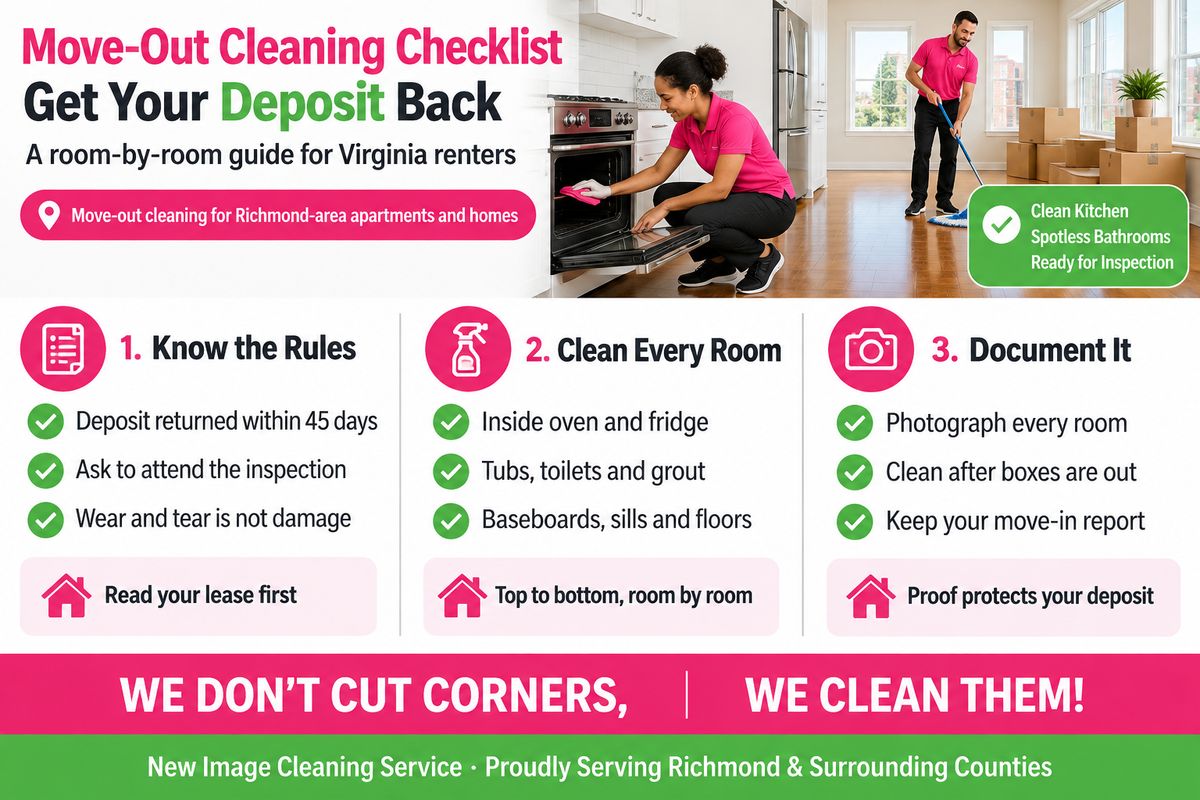
- Clean while the home is completely empty: everything reachable, you clean once, and you start on a known baseline.
- Start with the kitchen: clean cabinets, oven, refrigerator, microwave, stovetop, sink, and counters before unpacking.
- Thoroughly scrub bathrooms, check for moisture, mold signs and leaks; follow the EPA guidance if needed.
- Work top to bottom in bedrooms and living areas: fans, blinds, closets, baseboards; floors last; consider HEPA carpet cleaning.
- Time the clean around keys and movers; ask if oven or refrigerator cleaning are add-ons and consider hiring New Image Cleaning Service in Richmond.
The best time to clean a home is the short window when it is completely empty. Once the moving truck pulls up, every cabinet fills with dishes, every closet fills with boxes and the floors disappear under furniture. If you are buying a house or signing a new lease in the Richmond area, a little planning before move-in day lets you start fresh in a home that has actually been cleaned for you, not just for the last walkthrough. Here is what to clean before you unpack, in the order that saves the most work.
Why Cleaning Before Moving In Is Easier Than Cleaning After
Even when the previous owners or tenants did a good job, their clean was aimed at a closing or a deposit inspection. That usually means visible surfaces. The places you will use most, like the inside of kitchen cabinets, the shelves where your dishes go and the drawers where you keep utensils, are easy to skip when someone is rushing out the door.
Cleaning before moving in has three big advantages:
- Everything is reachable. No couch hiding the baseboards, no dresser blocking the outlet covers, no rug covering the floor you need to mop.
- You only clean once. Wiping out a cabinet takes a minute when it is empty. Doing it later means unloading it, cleaning it and loading it again.
- You start on a known baseline. After a top-to-bottom clean, any dust or grime you find later is yours, and keeping up with it becomes a routine instead of a project.
If you can, book the clean for the day you get the keys or the day before your furniture arrives. Even a one-day gap between closing or lease start and the moving truck makes a real difference.
Start With the Kitchen
The kitchen is where the last occupants left the most behind, and it is where you will put food, dishes and cookware first. Clean it before anything else gets unpacked.
- Cabinets and drawers, inside and out. Vacuum crumbs from corners first, then wipe the shelves and the cabinet fronts and knobs. Let shelves dry before you add shelf liner or dishes.
- The stovetop. Remove drip pans and burner grates, clean them and the knobs, and wipe underneath. Grease that has been sitting for months comes off far more easily before you start cooking.
- Inside the microwave. Heat a bowl of water for a few minutes to loosen splatters, then wipe it out.
- Oven and refrigerator. Clean the inside of both before you load groceries. Check the refrigerator drip pan and gaskets for old spills.
- Sink, drain and faucet. Scrub the basin, clean around the drain and faucet base, and run hot water to flush the line.
- Counters, backsplash and floors. Finish with counters and the backsplash, then hand wash the floor and baseboards last so you are not tracking dirt over clean surfaces.
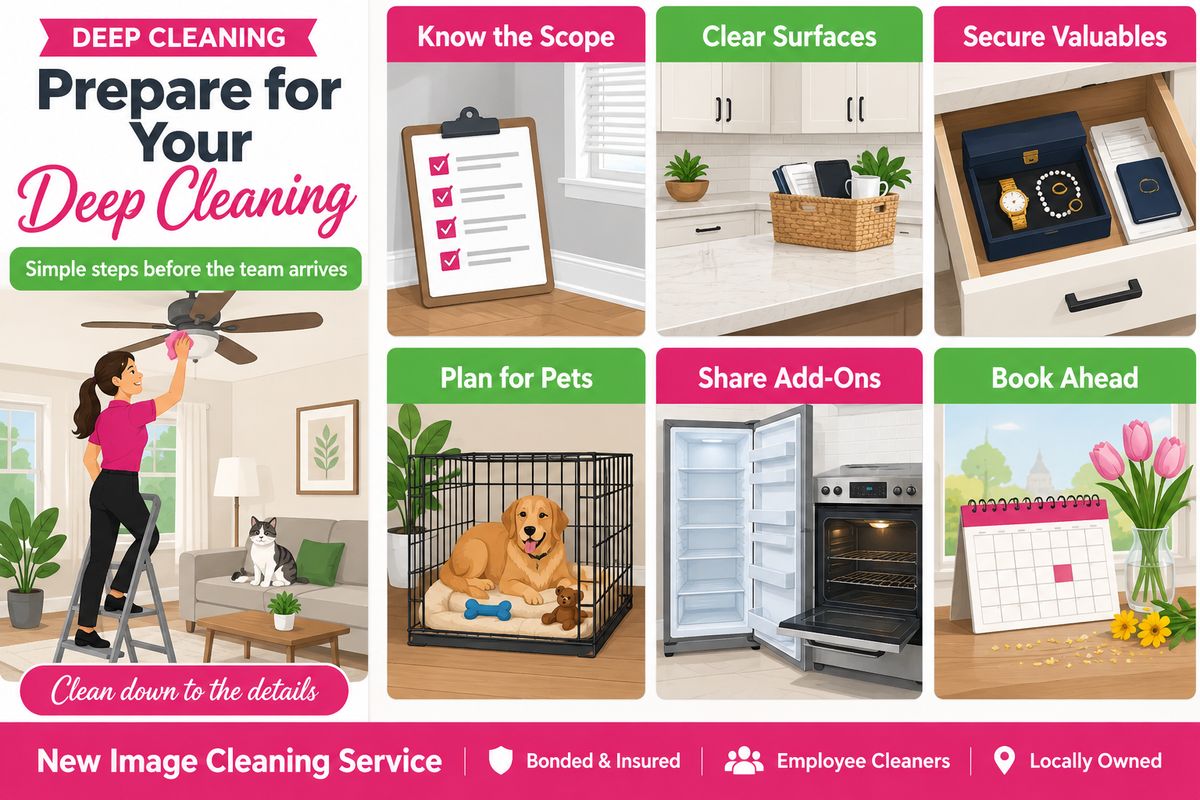
If you hire this part out, ask specifically about the inside of the oven and refrigerator. Many cleaning companies, including New Image Cleaning Service, treat those as add-ons you request when you book, so mention them up front.
Bathrooms: Clean Thoroughly and Check for Moisture
Bathrooms are the room most people want cleaned before they move in, and for good reason. Plan on a full scrub rather than a quick wipe.
- Scrub the toilet, including the base and the hinges of the seat, where buildup tends to hide.
- Clean the tub, shower walls, tile and fixtures, and shine the mirrors, chrome and faucets.
- Wipe out the vanity cabinet and drawers before you stock them.
- Hand wash the floor and baseboards, especially behind the toilet.
- Replace the shower curtain liner if one was left behind.
While you are in there, look for signs of moisture problems that cleaning alone will not solve: soft caulk, dark spots that come back after scrubbing, a musty smell under the sink or a slow drip. Richmond summers are humid, and bathrooms in homes that sat closed up between owners can show it. The EPA’s guide to mold cleanup in your home explains which small areas a homeowner can handle and when the source of the moisture needs to be fixed first. If you find a leak, report it to your landlord or note it for your contractor before you settle in.
Bedrooms, Closets and Living Areas
Once the kitchen and bathrooms are done, work through the rest of the house from top to bottom so dust falls onto floors you have not cleaned yet.
- Ceiling fans and light fixtures. Fan blades in a vacant home collect a surprising layer of dust. Clean them first.
- Cobwebs. Check ceiling corners, window frames and the tops of closets.
- Blinds and window sills. Dust the blinds slat by slat and wipe the sills and tracks.
- Closet shelves and rods. Wipe them down before your clothes go in.
- Doors, door frames and switch plates. These are high-touch surfaces that rarely get attention at move-out.
- Baseboards. Much easier with no furniture against the walls.
- Floors last. Vacuum carpets and mop hard floors once everything above them is clean.
If the previous occupants had pets and you have allergies, give carpets extra attention and consider having them professionally cleaned before your furniture arrives. Washing walls and woodwork is another job that is far easier in an empty room, so if the walls look dingy, this is the moment to do it.
Older Richmond Homes: Extra Care With Dust and Trim
A lot of Richmond’s housing stock is older, from rowhouses in the Fan and the Museum District to mid-century ranches in Henrico and Chesterfield. Older homes have more of the details that collect dust, like tall baseboards, picture rail, radiators, deep window sills and transoms. They also have a specific issue worth knowing about.
According to the EPA, homes built before 1978 are more likely to have lead-based paint, and dust and chips from deteriorating paint are one of the most common sources of lead exposure at home. That matters during a move because sellers and landlords often touch up paint, sand doors that stick or do small repairs right before you arrive. If your new home was built before 1978:
- Look for chipping or peeling paint on window sills, door frames and porches, and raise it with the seller or landlord.
- Wipe sills and floors with a damp cloth rather than dry dusting, which spreads fine dust around.
- Use a vacuum with a HEPA filter if you have one, especially if young children will live in the home.
- Do any sanding or scraping only after reading the EPA’s guidance, or hire a certified renovator.
Cleaning is not a substitute for addressing damaged paint, but a careful damp clean of an empty older home is a sensible first step.
Timing Your Move-In Clean Around Closing or Lease Start
The hardest part of a move-in clean is usually finding the window for it. A few tips that help:
- Buyers: Your keys typically come at or shortly after closing. If you can, delay the movers by a day so the clean happens in an empty house. Ask your agent whether the sale contract says anything about the condition the home must be left in, so you know what to expect at the final walkthrough.
- Renters: Ask your property manager when the unit will be released to you and whether the turnover clean is complete. Then walk through with your phone and photograph each room before you clean or unpack. Those photos help document the condition of the unit at the start of your lease.
- Everyone: Make sure the water and power are on before the clean is scheduled. A clean without hot water or lights is a clean that gets rescheduled.
- Avoid overlap with contractors. If painters, flooring installers or handymen are coming, schedule the clean after them. Construction dust settles on everything.
Fall and early winter can be a good time to move in the Richmond area: the pollen season is over, and humidity is lower than in summer, so windows can stay open to air out a closed-up house while you clean.
Hiring Help for Your Move-In Clean
If you would rather spend move-in week on utilities, school forms and unpacking, a professional move-in clean takes the biggest job off your list. When you compare companies, ask:
- Will the home be cleaned top to bottom while it is empty, including kitchens and bathrooms?
- Which tasks are add-ons, such as the inside of the oven and refrigerator, interior windows or washing walls?
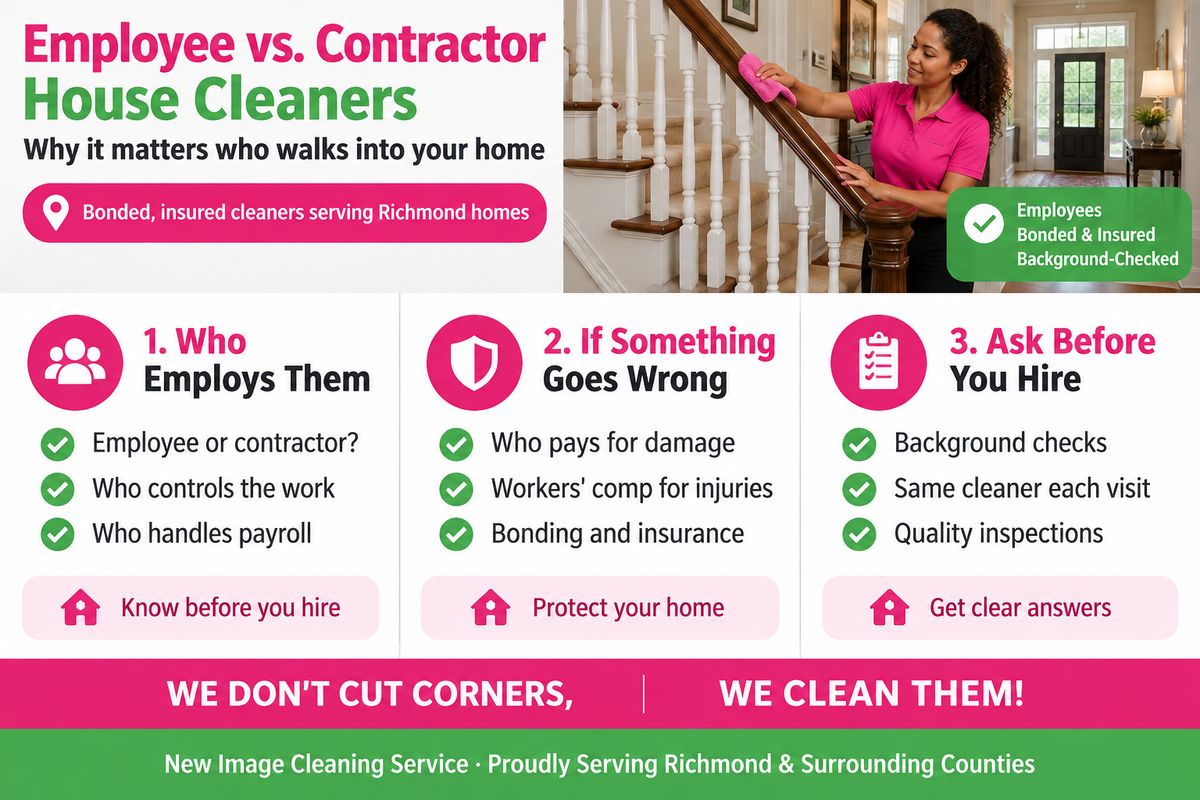
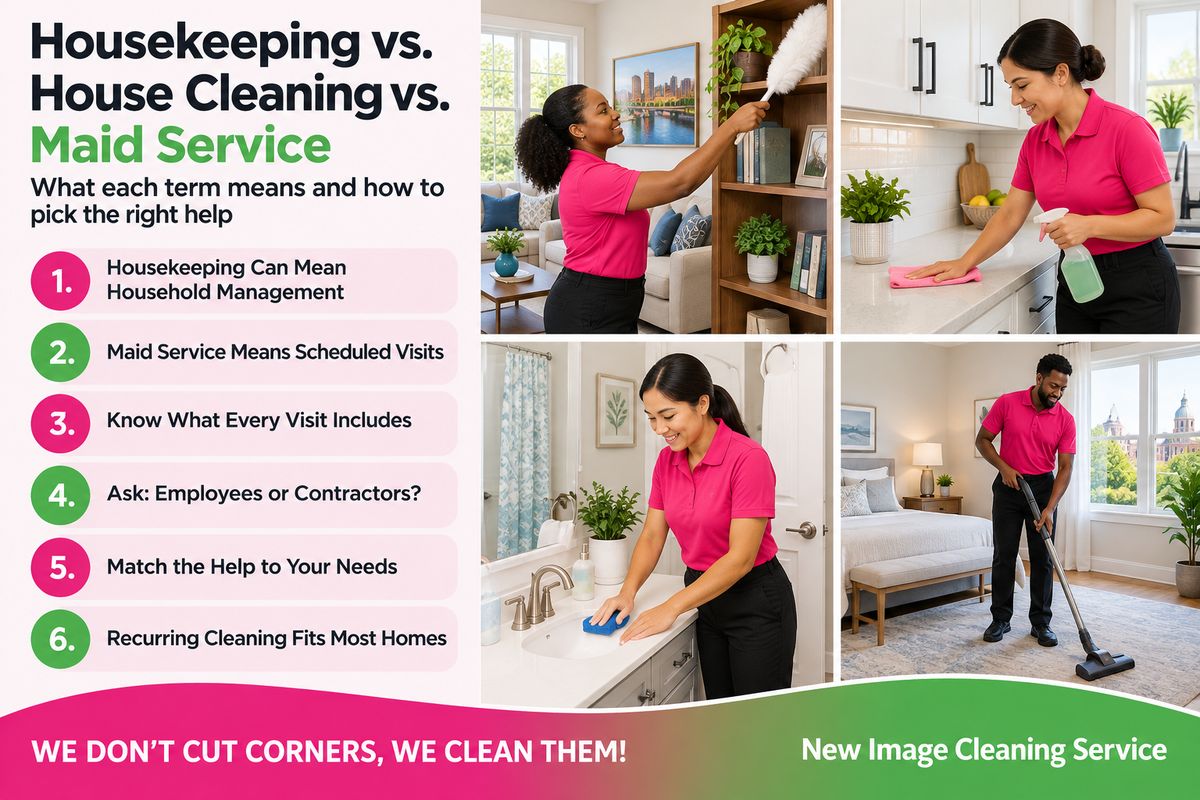
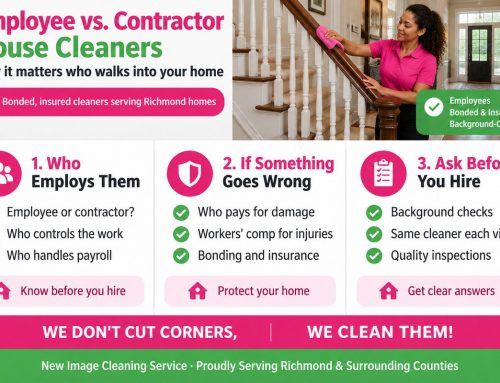
- Are the cleaners employees of the company, and are they bonded, insured and background-checked?
- What happens if something is missed?
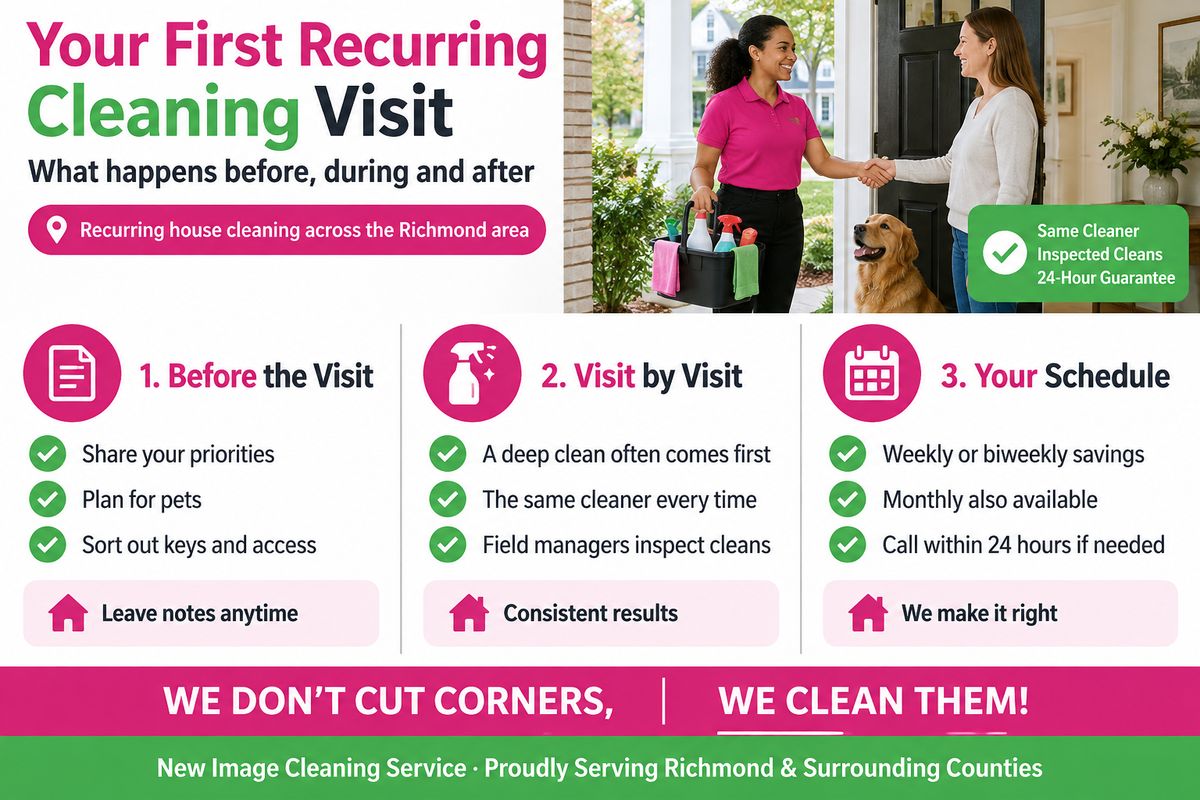
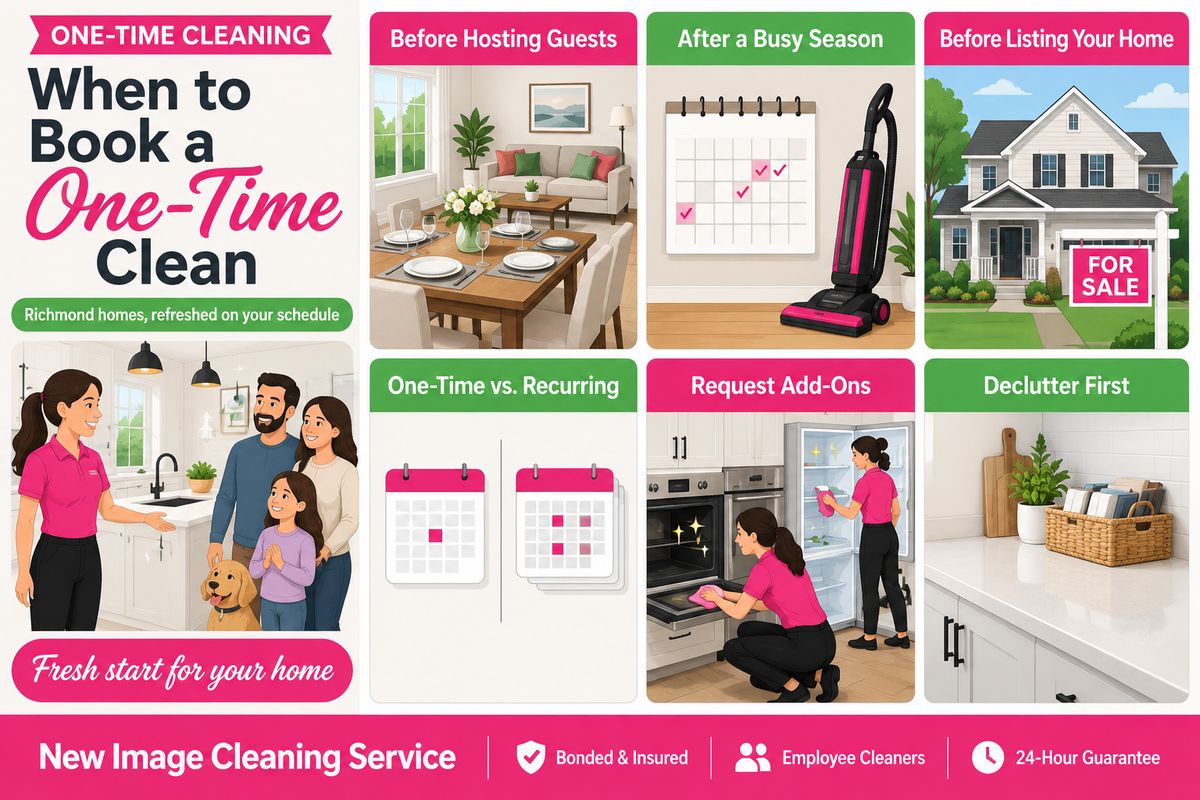
At New Image Cleaning Service, our cleaners are background-checked employees, bonded and insured, and we have served the Richmond metro for 20 years. If anything is not right after your clean, call within 24 hours and we will return to make it right at no additional charge. Our move-in and move-out cleaning service covers homes and apartments across Richmond, Henrico, Chesterfield, Hanover and the surrounding counties. If the home needs more than a standard clean, our guide to deep cleaning vs. standard cleaning explains the difference.
Once you are settled, many new homeowners keep the momentum going with a weekly or biweekly schedule, which comes with discounted rates compared with one-time visits.
Get Your New Home Ready Before the Boxes Arrive
Know your move-in date? Call 804-239-6790 or request a free quote, and tell us the address, the date you get the keys and any add-ons you want. We will help you plan the clean so you can unpack into a home that is ready for you.
Share this article
Related Posts

Follow us
A quick overview of the topics covered in this article.